 |
 |
 |
|
|
|||||||||||||||||||||||||
 |
||
| BUILDING OWNERS who find signs of termite activity inside a building have several options for professional protection from continued termite infestation and timber damage in the building.
Initial Inspection & Report to AS:3660 - a thorough inspection of buildings and surrounds - detailed written report to Australian Standard 3660 re areas inspected - evidence found of termite activity - high risk termite entry areas inaccessible to inspection - termite control options and limitations. |
||
| Chemical Soil Treatment around the perimeter and sub-floor of a building - to eradicate termites attempting to gain entry into the building - Termidor or Premise termiticides are recommended.
|
||
| Termite Baiting - installation - monitoring of termite bait stations - Nemesis - Exterra - Sentricon termite baits - this method relies heavily on the termites "finding" and consuming sufficient bait - recommended in some limited circumstances, particularly in areas where live termite activity is present.
|
||
| Building Modification & Maintenance - termite risk reduction measures - may include improving subfloor ventilation - removal of timber in contact with the soil - improving inspection access areas.
|
||
| Subsequent Inspections to AS:3660 - essential - at least at 3 to 6 months intervals where signs of termite activity has been previously located close by susceptible buildings or timber structures. | ||
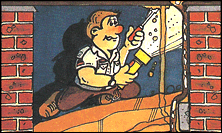
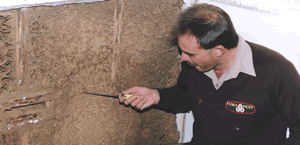
| Essential first step - obtain a professional Termite Inspection Report - a thorough inspection of the buildings and surrounds - a written inspection report and detailed specifications to AS:3660 for an integrated termite control program. It is recommended the inspection and report be received and considered in detail before any protective measures are commenced.
|
| Home insurance does NOT cover damage to structural timbers caused by termites - some pest control companies carry professional indemnity insurance cover for complete soil barrier treatments to AS3660 - practicable in vast majority of building types and construction.
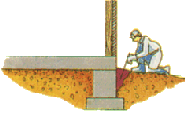
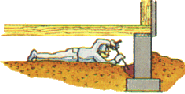
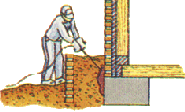
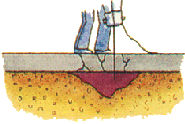
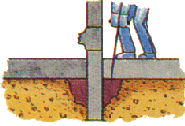
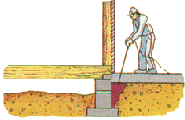
Complete soil treatment to AS:3660 - the soil at the base and perimeter of the subject building is treated with a long lasting termiticide - which kills the termites if they attempt to access the building - recommend Termidor or Premise termiticide be used due to their long term effectiveness and safety profile if used correctly - both Termidor and Premise termite control products exhibit a transfer effect - chemical taken back to central nest to eradicate termites therein - over time the complete eradication of the entire termite colony (discussed in detail later on this page). Termites in the building at the time of chemical soil treatment - they cannot safely return to their central colony nest through the termiticide in the soil. Termites are compelled to return every few days to their central colony nest in the ground to obtain moisture essential for their survival and to feed and groom the nymphs (young termites), the king, queen and other termites. Chemical Soil Barrier requires expert knowledge and specialised equipment to form a complete and continuous barrier to protect the building from a termite entry and infestation - see illustrations below: |
|
||||||||||||||
| There are several types of termite control chemicals registered by the relevant Australian Federal Government AVPMA for use in termite control as a soil treatment chemical.
WARNING: Several outdated products are solvent based termite control pesticides which may cause health problems to asthmatics during the drying process.
|
Termidor and Premise do NOT have an obnoxious odour or emit airborne residues or fumes. Both are registered as a low hazard insecticide with a CAUTION notation on the registered label.
Termidor and Premise represent modern technology and are NOT in the older style organo-chlorine or organo-phosphate pesticide group. |
|||
Avoid repellency products: Some alternative termiticides have a strong repellency action to deter foraging termites. Repellant products are less effective in that the termites can detect the chemical and avoid it and move along the treated soil areas, actively seeking a gap to gain entry into the building. Non-repellant products, such as Termidor and Premise are more effective, in that the termites cannot avoid what they cannot detect. The chemical adheres to the skin of the worker termites or they ingest it when tunneling through treated soil areas. These products have a delayed lethal effect - enough time to be taken back to the colony nest and be spread to other termites during their mutual feeding and grooming. With sufficient consumption of the chemical, the entire colony is eliminated.
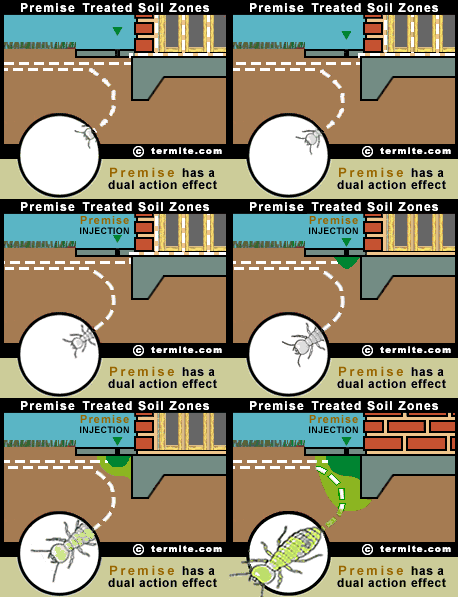
Premise will act to kill termites, in the higher concentration treated soil areas abutting the building. With Premise, termites that forage in the lower concentrated treated soil areas, will become disorientated, stop feeding, and are fatally diseased by natural fungi and micro-organisms in the soil. |
|||
Both Bayer Premise and BASF Termidor products are scientifically proven to be transferred from one affected termite to another. The technology is aimed at eradicating the queen termite and the entire colony - refer to the animated illustration below: |
 Termites tunneling in the Premise or Termidor treated soil area abutting the building (of high concentration - near the point of application) are killed outright. Termites tunneling in the Premise or Termidor treated soil area abutting the building (of high concentration - near the point of application) are killed outright.
 Termites tunneling in the outer parts of a Premise or Termidor treated soil area (of low concentration) will not detect the chemical which adheres to their bodies and has a delayed lethal effect of several days - enough time to be transferred back to the central colony nest. Termites tunneling in the outer parts of a Premise or Termidor treated soil area (of low concentration) will not detect the chemical which adheres to their bodies and has a delayed lethal effect of several days - enough time to be transferred back to the central colony nest.
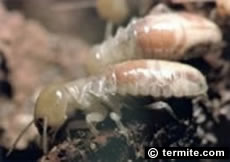
Transfer effect - Termidor and Premise termiticide sticks to soft waxy skin of worker termites - some termites transfer the termiticide back to central nest - spread to other termites and the queen - mutual grooming and feeding habits - termites groom fungi and termiticide from each others skin - termites also regurgitate liquidized timber food and any termiticide digested during their tunneling in a termiticide treated zone - industry feedback indicates Termidor and Premise are highly effective termiticides. Cannibals by nature - termites carry away or cannibalize other dead termites - further spreading the lethal effect of the Premise or Termidor termiticides throughout the termite colony. |
|||||
Termite baits registered in Australia by the Australian Federal Government APVMA Registration Authority are Nemesis, Exterra and Sentricon brand of termite baits.
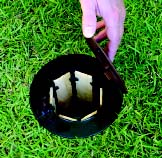
Each baiting system uses a number of plastic bait stations for in-ground and above-ground installation where active termites have been located. How a termite bait works: Each termite bait contains an IGR chemical - that is an insect growth regulator - the Nemesis bait contains chlorfluazuron as the active constituent. The worker termites readily eat the bait and pass it onto other termites in the central nest as part of their mutual feeding and grooming process. Termites must regularly molt in their development from nymph to adult. The IGR is slow acting - enough time to spread it's deady effect to other termites in the colony. A cascading lethal effect: The chemical prevents the termites from regrowing their external skeleton, resulting in the death of the termite. Termites cannibalize other dead termites thereby hastening the elimination of the entire colony. Termites have acute survival instincts. The location of a toxic food source if detected, will be abandoned. Too much disturbance of the foraging termites (workers and soldiers) in a particular location, will alert the termite colony to abandon the area. The termites appear to be gone, but may in fact be entering the building in other areas. Your home is a much bigger bait station. Regular monitoring is required: The Nemesis, Exterra and Sentricon termite baiting systems are subject to regular inspection and monitoring by the termite controller. The larger the number of termites that consume the bait, the quicker and more certain is the termite colony elimination process. Baiting is sometimes unreliable: Termite colony elimination in favourable circumstances may take several weeks to a few months. However, in some cases, termite colony elimination is unsuccessful or may take years, depending on the circumstances. It depends if a large number of termites find and consume the bait, then colony elimination is virtually assured within a few months. The experience and skill of the pest controller is paramount, in order to properly decide if and where a baiting program is to be implemented and properly monitored. WARNING: some pest controllers offer termite baiting at ridiculously low prices that does not cover direct materials and labour. BEWARE the pest control licensing system is inadequate. Some individuals have a State Govt pest control licence with little training or experience. Consumer note: It is usual to reinspect the bait stations and the buildings and surrounds every month to reposition, reapply or replenish the bait, if necessary. This process is labour intensive so that the long term cost of the monitoring and baiting system may accumulate out of hand before the chance of success or otherwise, is realised. |
 |
Ring the Experts: successful termite protection of a building using a baiting program often requires expert skill and judgment, based upon years of field-work experience in termite control in a wide variety of circumstances.
Live termites found? One critical aspect is the bait stations should to installed in areas where live activity is found. Otherwise the termites must blindly "find" the stations to have any chance of bait consumption and successful elimination. |
||
CONSUMER NOTICE: Be wary of companies want full payment upfront that promise a timber replacement warranty using a termite baiting and monitoring system. Be careful to read the Contract fine print which stipulates that the so called "warranty" may or may NOT apply at some future point in time when the company decides at it's discretion that the termite colony elimination is successful. |
Your home is a much bigger bait station. Other termite nests may exist in trees, under concrete on-ground flooring and in-fill patios of neighboring properties. These termite nest may be unaffected by the baiting pro gram. If termites happen to find the in-ground monitoring stations, the a bait is placed therein. If this involves sufficient disruption of the termites may avoid the in-ground bait station, entirely. RECOMMENDATION: Your Pest Controller attach the Nemesis Termite Bait directly onto known termite activity areas. The rate and amount of consumption is monitored for several weeks. In addition, if practicable thereafter, a complete chemical soil barrier treatment using Termidor or Premise be applied around the immediate perimeter of the building and other high risk entry points. AN INTEGRATED APPROACH: A termite monitoring and baiting program can be integrated with a range of methods including (1) drilling susceptible trees and eradication of any termite nest located therein, and (2) in conjunction with a follow up chemical soil treatment using Termidor or Premise. |
|||
| Listed below are some useful recommendations for the home-owner to carry out in order to help reduce the risk of undetected termite activity inside a building.
Rapid termite colony development and building infestation is usually associated with a readily available timber food and moisture source nearby the central nest. Buildings are often constructed in a way that allow termites to gain undetectable entry from the soil to the structural timbers of the building. (1) Moisture exclusion from inside the wall cavities, around the base of the building and sub-floor area. Exclude excessive water run-off from a sub-floor area by the installation of ag-drains. Make sure there is adequate cross flow ventilation in the sub-floor area. In addition, a qualified plumber should be engaged to ensure there is no water leakage from plumbing pipes in the bathroom, the shower recess, kitchen, down pipes, guttering and air conditioning unit overflow. Look for signs of dampness in the wall cavities, broken roof tiles, faulty guttering and the like. High humidity, dampness or moisture accumulating in a wall cavity is of high risk to encouraging large scale termite activity inside the building. (2) Removal of any timber in contact with the soil. Timbers should be stored above ground level to allow full inspection for termite activity. Any landscaping using timber chip mulch and railway sleepers should be removed, as they provide ready food source to assist in rapid termite colony development. (3) Ensure inspection access is unimpeded, particularly in sub-floor areas of suspended floors, in order to look for evidence of termite activity. If your home is on concrete slab on-ground flooring, make sure you can inspect the entire external slab edge for evidence of termite mud-shelter tubes. Do NOT allow this area to be covered by pavers, landscaping, planter pots, etc, as termites often gain entry into the wall cavity through external weep holes and gaps in the mortar of brick-work. If you find live termites DO NOT disturb the area. DO NOT use spray insecticides on the termites. If sufficiently disturbed, the termites may move elsewhere and not be rediscovered until severe damage has been done. The termite controller can install a termite bait on the termite activity area aimed at maximising bait consumption by the termites and elimination of the entire colony. |
||
Recommend 3 or 6 monthly inspections be carried for the first 24 months following a chemical soil treatment - thereafter annual inspection is recommended to maintain your service warranty. |
|
|||||||||||||||||||||||||||||||||||||||||||||||||||||||||||||||||||||||||||||
|
|||||||||||||||||||||||||
 
|
| Published by the Fumapest Group © Copyright 1995 to - updated |