Pest Control - Fleas - Flea Control
Fleas are obnoxious pests

fleas
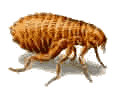
Parasites of humans: Fleas are a parasite which feed on the blood of warm blooded animals, including humans, dogs and cats.
Blood suckers: Fleas pierce the skin, inject an anti-coagulant chemical into the bloodstream of the host to prevent blood clotting.
YUK but true: When fleas suck the blood from their host, some of the blood passes directly through their rectum in order to lay their eggs.
Tapeworms: A flea bite can cause acute irritation, infection and transfer of other parasites, including tapeworms. For irritable flea bites consult your pharmacist for an appropriate antiseptic cream or in more serious situations, your medical practitioner.
Dogs and cats: Fleas often enter a building on dogs and cats, and are commonly deposited in carpeted areas, in the garden, yard and under the building, particularly shaded sandy soil ares, on the southern side of the building (shaded areas).
Dormant in your carpets: In ideal hot humid weather, flea eggs may take only a few weeks to hatch in large numbers. In cooler times of the year, the flea eggs may lay dormant in carpets and subfloor areas for more than 12 months before hatching - generally during hot humid weather and all of a sudden, sometimes in plague proportions.

Summer holidays and you're the HOST: A uninhabited home that has been locked up for an extended period during hot humid weather, will act as an incubator for the dormant fleas to hatch in plague proportions. It is common-place for people who own a dog or cat, to return home from an extended summer vacation to find a house full of fleas.

Pest Control for Fleas

Vacuuming of carpets: It is essential for carpets and timber floor areas be thoroughly vacuumed especially in low traffic areas, under furniture, around edges of rooms and hallways. Concrete pathways should be thoroughly swept or vacuumed.


Insecticide treatment: In severe cases, there may be no practical alternative to insecticide treatment of likely habitat areas, particularly low traffic areas of carpeting, around the edges of timber flooring and dog or cat resting areas.


We recommend a low hazard IGR synthetic pyrethroid insecticide be applied as a light spray to such areas, and upon drying be swept into the carpet pile with a straw broom.


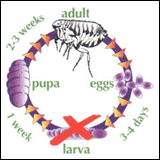
IGR Insect Growth Regulator is a ultra low hazard chemical that acts specifically to inhibit development of the flea at the larva stage of their life cycle.


The flea larva is a small "grub" that lives in carpet, in cracks or joins of timber flooring and in soil areas. A readily accessible supply of organic matter, such as shed skin flakes from humans, is essential for it's development. This is the critical point in the life cycle of the flea in which to attack it for maximum control effect on the infestation.


With a heavy infestation of adult fleas the affected rooms should be fumigated with a similar insecticide dispensed through a fogging machine. This will provide immediate relief (like a flea "bomb") but with not kill the larva or egg sacs. The carpets and other areas should be treated as noted above with an IGR synthetic pyrethroid insecticide.


To help prevent reinfestation we recommend the home owner regularly vacuum carpets; regularly wash your dog or cat with shampoo containing a flea control product; and restrict access of your dog or cat to any sub-floor areas, particularly during the humid summer months. If your dog or cat regularly plays with stray dogs or cats then the transfer of fleas eggs is virtually certain during the hot humid months of the year.

The cost of professional flea control

The cost of professional flea control using the recommended low hazard IGR synthetic pyrethroid insecticides, will depend upon many factors, including the size of the property, the extent of infestation and ease of access to sub-floor areas.


Expect to pay about $185 to $250 for an average size 3 bedroom home, with a small garden area and pathways along the side of the building. Service warranty periods may vary depending upon the circumstances and risk of reinfestation.


Ring the experts: successful flea control depends on many variables learnt from technical training and practical experience in a wide variety of situations.


Consumer note: you may find cheaper prices for flea control in your local area, usually from companies using the cheaper solvent based pesticides in and around the home, which we do NOT recommend, especially if residents suffer asthma or bronchial ailments.

Receive a discount: We recommend whilst the pest controller is at your premesis to also have it checked for termite infestation. Home insurance does NOT cover the cost of termite damaged timbers which could exceed $50,000 in severe cases. If a combined service is done on same day, the cost of such an inspection and report to Australian Standard 3660 will be discounted accordingly .... for more details.


Be careful when selecting a pest controller - it's far too easy to get a State Govt issued pest control licence and start up a pest control business, using trainees with little knowledge or experience in flea control situations .... for more details.

Learn about other common household pests
Ants Borers Silverfish
Bed Bugs Cockroaches Spiders
Bees Fleas Termites
Bird Control Rats & Mice Wasps
Click here to learn how to protect your home from termites
termites termite control pest control consumer advice home
Published by Fumapest Group © copyright 1995 to